Deep in the cultural heart of Sri Lanka lies one of the island’s most mysterious and architecturally unique ancient monuments—Nalanda Gedige.
Surrounded by peaceful countryside near Matale, Nalanda Gedige is not just an ancient temple. It is one of Sri Lanka’s most fascinating archaeological treasures, combining Buddhist spirituality, South Indian architectural influence, and centuries of untold history. Unlike many temples in Sri Lanka built with brick or plaster, Nalanda Gedige was constructed almost entirely from stone—making it one of the island’s most unique historical monuments.
For travelers who love hidden history, ancient architecture, photography, and cultural discovery, Nalanda Gedige is one of Sri Lanka’s best-kept secrets.
What is Nalanda Gedige?
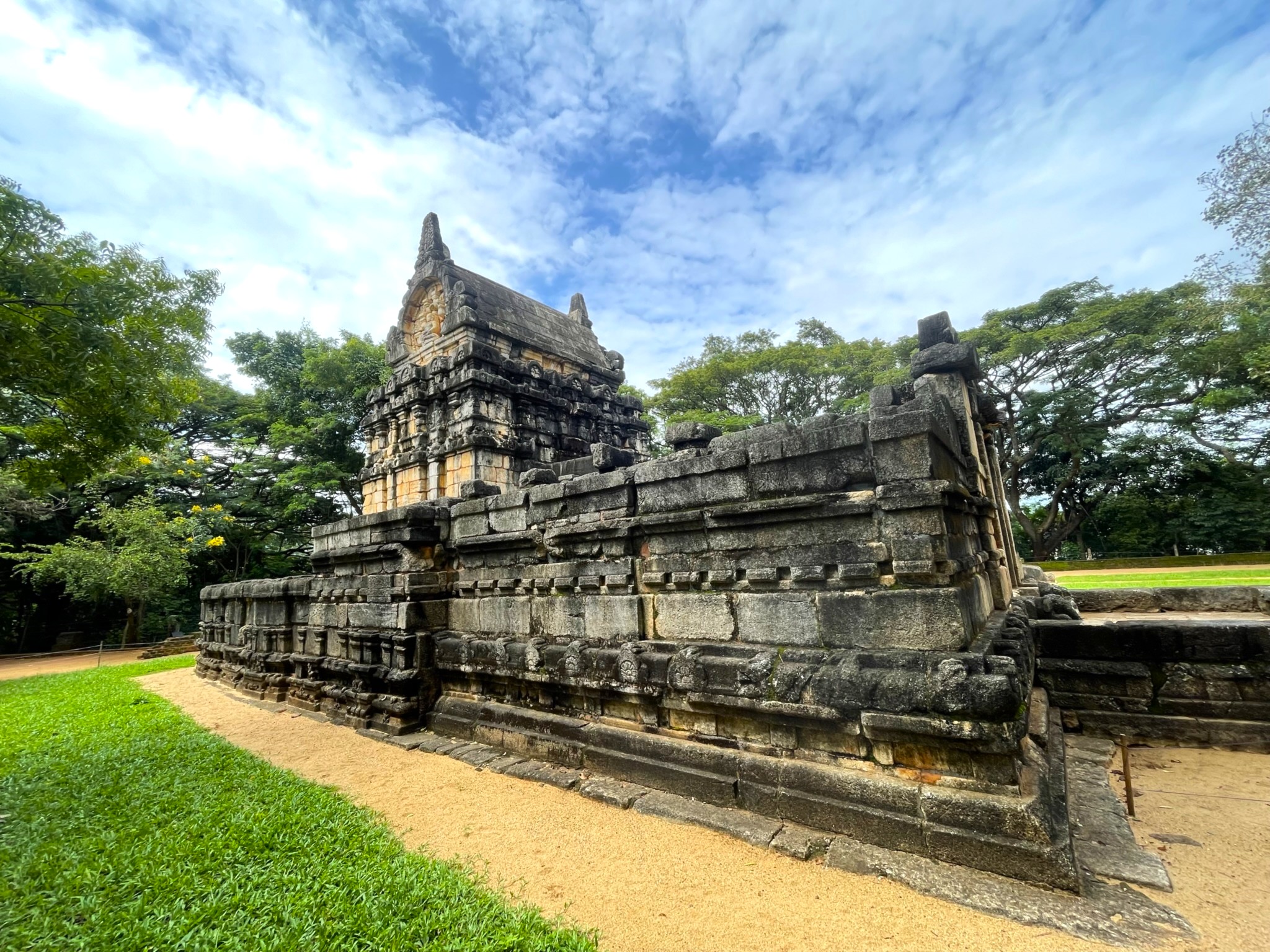
Nalanda Gedige is an ancient stone temple located in Sri Lanka’s Central Province, approximately 20 kilometers from Matale town. Archaeologists believe the monument was built between the 8th and 10th centuries CE, during a period when Sri Lanka experienced both local Buddhist influence and South Indian cultural interactions.
The structure is widely recognized for its unusual design, which combines:
- Sri Lankan Buddhist architectural features
- South Indian Dravidian temple design
- Mahayana and possible Vajrayana Buddhist artistic elements
This makes Nalanda Gedige one of the most unique religious monuments in Sri Lanka.
The Meaning Behind the Name “Nalanda”
The word Nalanda is believed to mean “giver of wisdom” or “place of learning.” Some historians believe the name may have symbolic links to ancient Buddhist learning traditions, although Nalanda Gedige in Sri Lanka should not be confused with the famous ancient Nalanda University in India.
The Mysterious History of Nalanda Gedige
The exact original purpose of Nalanda Gedige is still debated by historians. Some archaeological evidence suggests that it may have functioned as:
A Buddhist Monastery
A pillar inscription discovered at the site from approximately the 9th–10th century CE suggests the monument was used by Buddhist monks and may have served as a religious institution.
A Mahayana or Tantric Buddhist Center
Some scholars have identified artistic and symbolic features associated with Mahayana or Vajrayana Buddhist traditions.
A Cultural Fusion Monument
Because of its strong South Indian Pallava-style stone carvings combined with Buddhist usage, some experts believe Nalanda Gedige represents a rare fusion of Sri Lankan and South Indian cultural influence during ancient times.
Unique Architecture of Nalanda Gedige
What makes Nalanda Gedige truly special is its architecture. Unlike typical Sri Lankan Buddhist temples, this monument has Dravidian Temple Features including:
- Stone entrance halls
- Mandapa-style chambers
- Decorative carvings
- Sacred central shrine layout
These features show strong influence from South Indian Pallava architecture.
Stone Carvings and Ancient Art
As you walk around the temple, you can see intricate floral carvings, guardian figures, symbolic stone artwork, and rare decorative sculptures. Some carvings suggest tantric artistic influence, which is very uncommon in Sri Lankan Buddhist monuments.
The Mystery of the Manava Maithuna Carving
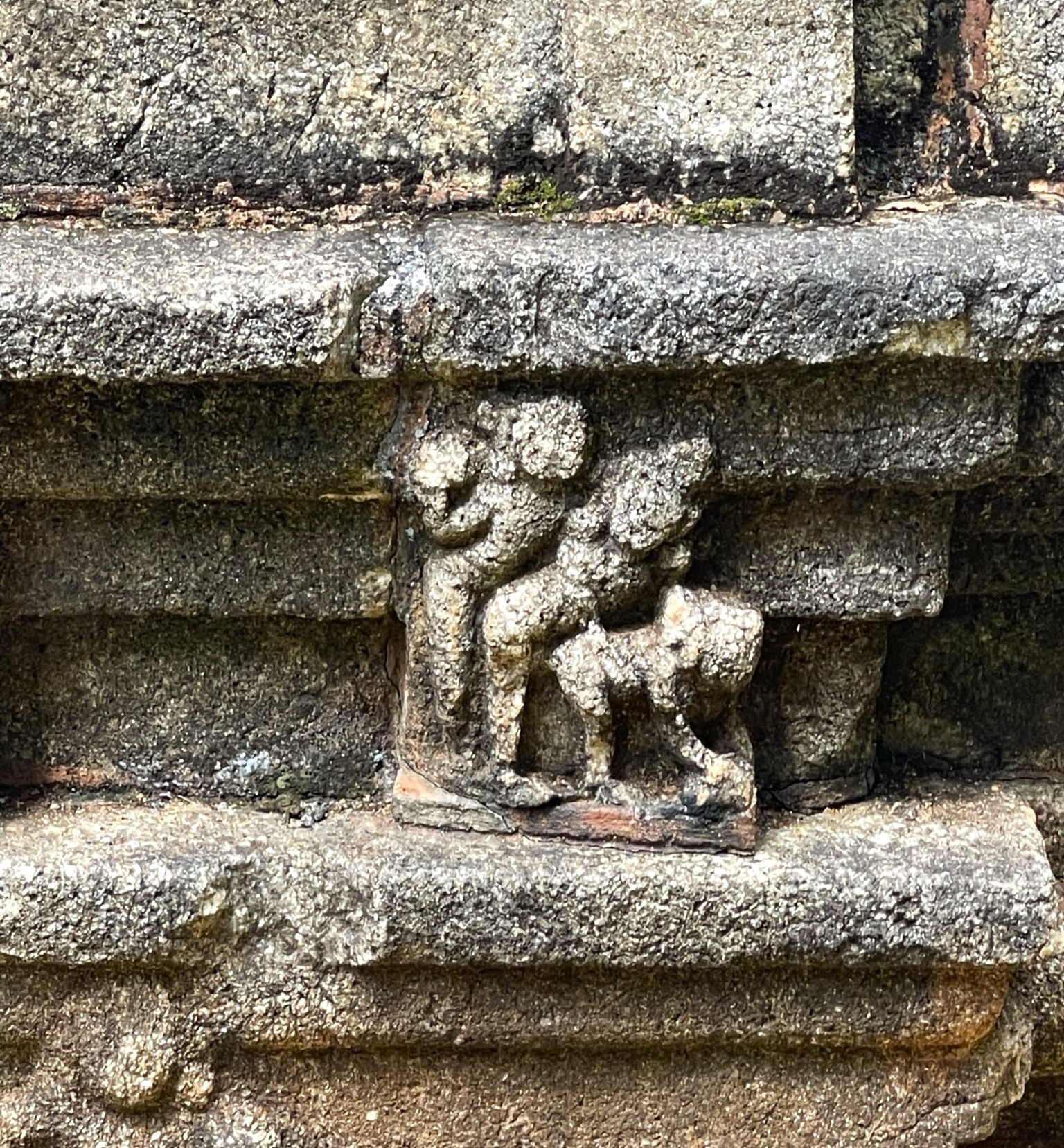
One of the most unusual carvings at Nalanda Gedige is known as the Manava Maithuna carving. This rare sculpture appears to show two symbolic male human figures alongside a lion (Simha) figure. According to available archaeological interpretations, the exact identities or names of these figures remain unknown, and no officially confirmed historical names have been recorded. Scholars believe this carving may represent Tantric Buddhist symbolism, fertility, spiritual energy, or the balance of cosmic forces, making it one of the most mysterious artistic features found at Nalanda Gedige.
Was Nalanda Gedige Moved?
Yes—and this is one of the most incredible parts of its history. During the construction of the nearby Bowatenna Reservoir, the original site of Nalanda Gedige was at risk of being submerged underwater. To protect the monument, Sri Lankan conservation experts carefully dismantled the structure stone by stone and rebuilt it at its present location on higher ground. This restoration and relocation work began in the 1970s, and conservation efforts continued through the 1980s.
Is Nalanda Gedige the Center of Sri Lanka?
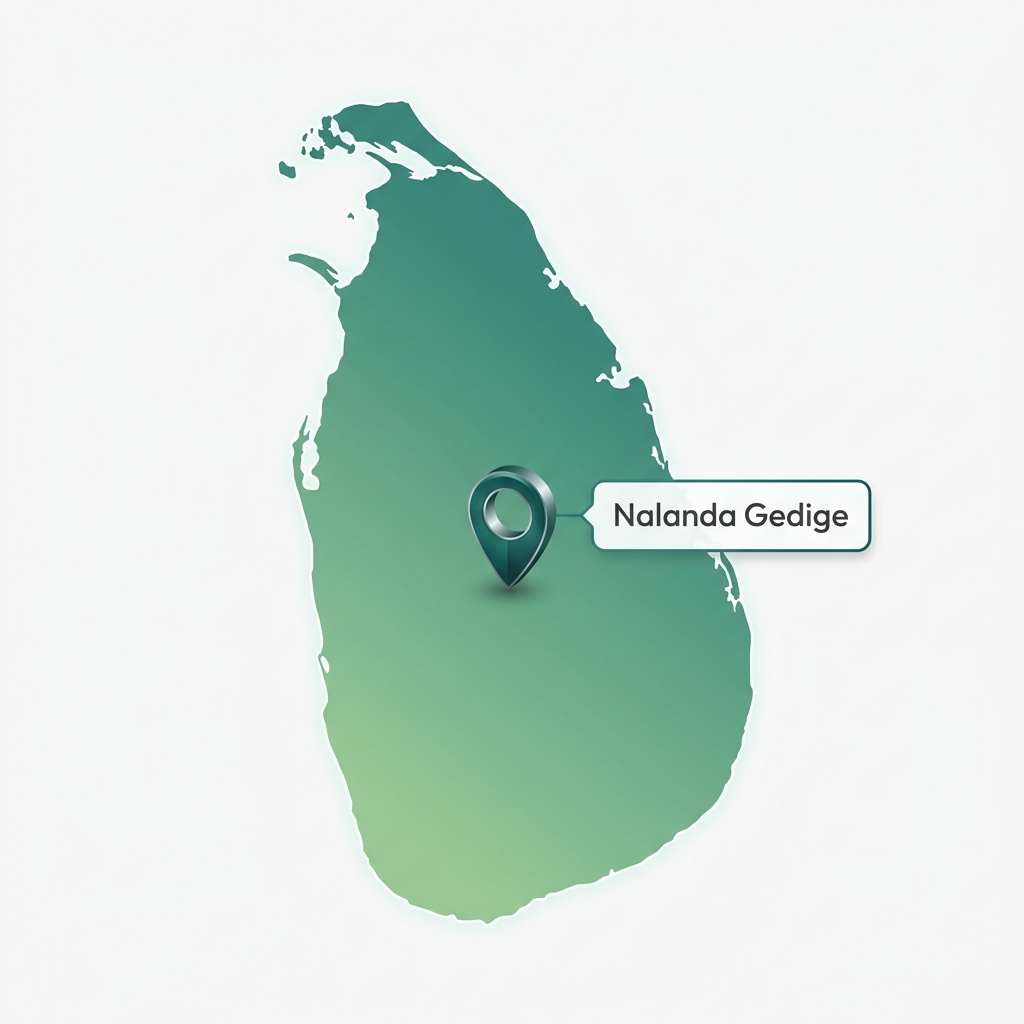
Nalanda Gedige is popularly associated with being close to the geographical center of Sri Lanka. Although modern mapping methods may vary slightly, the site has long been recognized locally and historically as being near the island’s central point. This adds another layer of mystery and attraction to the destination.
Best Time to Visit Nalanda Gedige
The best time to visit is January to April. During this period, you can expect lower rainfall, better photography conditions, and comfortable exploration. Early morning or late afternoon is ideal for photography.
Things to See at Nalanda Gedige
When visiting, don’t miss:
- The stone temple entrance
- Ancient carved pillars
- Surrounding water views
- Peaceful natural landscapes
- Historical inscriptions
How to Reach Nalanda Gedige
- From Kandy: Approximately 1.5 to 2 hours by road.
- From Dambulla: Approximately 45 minutes by road.
- From Matale: Approximately 30 minutes by road.
Hiring a private car or tuk-tuk is the easiest way to reach the site.
Travel Tips for Visitors
- Wear comfortable walking shoes
- Carry water and sun protection
- Bring a camera for stone details
- Respect the sacred and archaeological environment
- Avoid touching ancient carvings
Final Thoughts
Nalanda Gedige is not just a masterpiece of ancient engineering, culture, and religious harmony. It offers mystery, silence, and one of Sri Lanka’s most unique stories carved in stone. If you love hidden gems, ancient architecture, and discovering places that many tourists miss, Nalanda Gedige deserves a place on your Sri Lanka travel itinerary.